
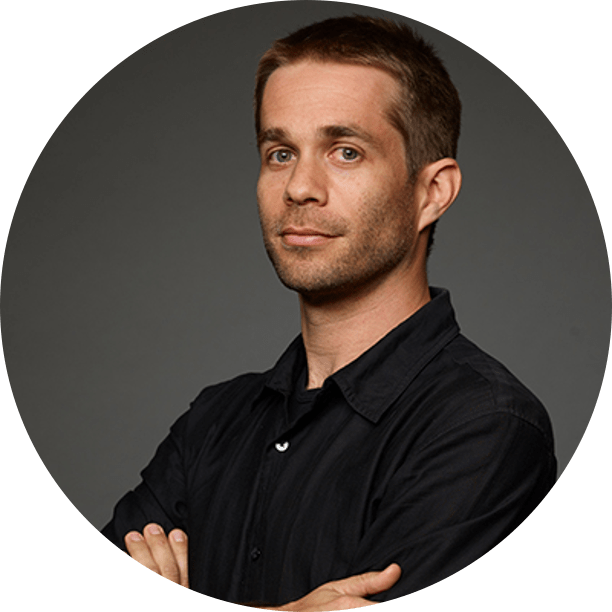
 Read, watch, and listen to stories from Columbians who taught and learned during the pandemic.
Voices of Hybrid & Online Teaching and Learning: Tal Lazar
Adjunct Assistant Professor of Film, School of the Arts
Tal Lazar shares the changes he made to adapt a face-to-face Intro to Cinematography course to a fully online course, making explicit his expectations of students, establishing guidelines to facilitate online learning, and adjusting his own expectations of the amount of content that can be meaningfully engaged with during synchronous class sessions.
His practices include:
- testing all the technology with your students in advance of the first class
- asking students to minimize distraction in their learning environment, to be present and focused during class
- communicating expected etiquette for interaction.
- promoting active student engagement through breakouts, Q&A, and asking students to do reflective writing to formulate their thoughts.
- managing his own expectations about what can be accomplished during a synchronous class session, focusing on the core of what needs to be taught and making room for more interactivity.
Read the Video Transcript
“Hello, my name is Tal Lazar. I’m an instructor at Columbia School of the Arts, and I’m teaching an introduction to cinematography class in the film program. My class size normally is just under 20 students, sometimes more, sometimes less. And normally, the class involves a heavy component of hands-on activities, dealing with cameras and lighting, and a lot of lecture and exercises, meaning the students will sit in the class and then go out and film things, and then we come back and we watch it on the big screen. Obviously, many of the things that I just mentioned became impossible to achieve during COVID. If it is the hands-on activities in which students were even not able to get the cameras from the school and had to use their own cameras, sometimes smartphones, to achieve the things that we study in the class, which is a little bit geared more towards professional cinematography and professional cameras that the school has. In addition, there’s a huge difference in watching films on the big screen, on a cinema screen, versus on a computer screen or a cell phone screen. So that became a huge limitation for us too. But we managed to do it. And we managed to create courses that I believe did give the students a lot of information, a lot of knowledge, and a lot of good experience, even with all these limitations. So I’ll talk a little bit about what we changed. In the beginning, we changed our expectations a little bit. As you know, when people are sitting in their living room and participating in a class, things are a little bit different. So first of all, one of the requirements that I had is to use a computer and not a mobile device. Mobile devices tend to have text messages come up and emails come up and so on and so on. It’s very distracting. The computer screen is bigger, and it’s a little bit more conducive to what we’re doing, so I required the students to use a computer. Secondly, all the technical matters had to be figured out before. So before starting the course, I had a test session up. Basically, I was working on my computer with a Zoom session on, and students could log in and test all the things that we need to test. One of them is screen-sharing because students are presenting their ideas, they’re presenting their assignments. They need to know not only how to participate, but also how to engage and present using the software. And it’s important to test all of that stuff beforehand and not during the course because all these little technical problems add up to precious time during the course. Finally, find a nice, quiet corner in their home, which is a little bit difficult to do in small New York apartments, especially when there are roommates and family, but that was definitely difficult, not only in the physical sense, but also in the mental sense too. Because when you go to a classroom, especially in Columbia, you go to the campus, you go to the building and the class, you sit down, there’s a certain mental switch that you do. That doesn’t happen. When you turn on your computer in your living room, it’s a little bit more difficult for people to do that switch, so we had to overcome that too. A few other things that I required is activate the camera. I think it’s very important. There are obviously exceptions to this, and students request it and always they get that exception. If they needed, if they’re not feeling well or something happens at home, that’s completely fine. But generally speaking, the camera needs to be on. That creates a certain sense of accountability that people are there, they’re participating. Even with the camera on, and I’m sure that many of you experienced this, you can tell when people are there and when they’re not there. Even when they’re kind of looking down and looking at their phone, you can see that. And as an instructor, you’re very sensitive to these things in the classroom, the physical classroom and also in a remote classroom. You can see when you look at all the squares, you know right away who’s there and who’s not there. So that at least give some feedback that me, as an instructor, I can use as I’m going through the lesson. I always ask the students not to use any communication software, such as emailing or messaging during the class. A little bit more difficult to enforce in remote learning, but still that was an important rule, and I think that most students followed it. And of course, arriving presentable to the class, even though you’re sitting in their living room or their bedroom or whatnot, it is still a meeting, it’s still a meeting that simulates an interaction with the professional world. And some other etiquettes such as muting your microphone when you’re not speaking so that background noises don’t affect anything. And etiquette and breakout rooms where I keep asking people, when you go into a breakout room, you make sure that everybody gets an opportunity to speak. And the time that I allocate for breakout rooms is proportional to the people in the breakout room. So if it’s three people in each breakout room, then at least three, four minutes, so that every person in the breakout room gets about a minute to speak and then maybe a small discussion afterwards with electing a representative, who will ultimately present the opinion of everybody in the room. I found that to be one of the most effective tools that Zoom gave us at least. With all the disadvantages that we had, it was actually much easier to use breakout room and create work groups than in a physical classroom, actually, because you can mix people much easier and you can create cross-referencing between students much easier. So that became a really fun tool, not only for myself, but also for the students, and we use it extensively. That created a lot of engagement. And I couldn’t stress more how much activating students in this environment, sitting at home and learning how much important that is. Sitting in passively listening is obviously one of the least effective teaching methods. We already know that it’s least effective in the classroom and even more so in remote learning if you’re sitting in front of the computer for many hours and you’re listening to an instructor speaking. That’s why a sprinkling interactions, be it breakout rooms or presentations by students who present their work in their own words even with presentation software became super, super important and integral to our classes. I also asked students to bring in a pen and paper, write down their thoughts because the class has a certain rhythm for how it goes and sometimes thoughts are fleeting. So since you’re sitting at your desk and you’re sitting in front of your computer, always having a pen and paper there is very important. I usually start my classes with a repetition. So where we left off, a couple of questions from last time we met and give students a minute or two, writing down their answers. That ensures that they have that pen and paper, that they’re participating, that they’re executing this task, and ultimately that everybody writes something so that when we get back to our conversation, I can talk with anybody, especially those who are a little bit more quiet, maybe shy, encourage them to participate and that they have something to say because they had a minute or two to formulate their thoughts. Finally, I will just say that one of the big problems that I experienced when comparing this new form of teaching, primarily now over Zoom, is that everything that I just described takes time from the class. All the interaction, all the breakup rooms, everything takes a huge chunk of time from the class. This means that you have less context. If I had what I had for a three hour class before, now suddenly I had to reduce that. In the beginning, it’s a little bit painful. You think that everything is very precious, but ultimately you realize that there is a core to the class that works much better when there’s a little bit less content and a lot more interaction. And I started measuring. Since I’m recording all my classes, I started measuring and seeing how much time we spent on interactions and how much time we spent on delivering information. And my rule of thumb was that out of three hours, if two hours is spent on delivery of information and discussions over that question and answers, and one hour is spent on interactions, it could be breakout rooms or presentation or anything like that, then that’s a pretty good measure for me. And I found that to be very, very effective, especially if it’s sprinkled around so that people have their attention span refreshed and refreshed all the time. I think moving forward, there’s a lot of lessons we learned definitely in replacing the frontal lecture so that we can do these things offline, maybe even recorded or at Zoom sessions, or however we will end up doing this, and then using the face-to-face time the actual physical, frontal time for more interactions, more activities, and more interesting things that can engage students, rather than me standing in front of everybody and repeating a lecture that I’ve done before. I think that would be more effective moving forward. And also reducing class time a little bit. My classes sometimes are in the evening, and doing a class sometimes even a technical class between 6:00 and 9:00 PM, it can be a little bit challenging. So I hope the thoughts helped anybody out there. Thank you for listening.”